Article: Does Cardio Age Your Face After 40? The Truth About Wrinkles, Collagen Loss & “Runner's Face”
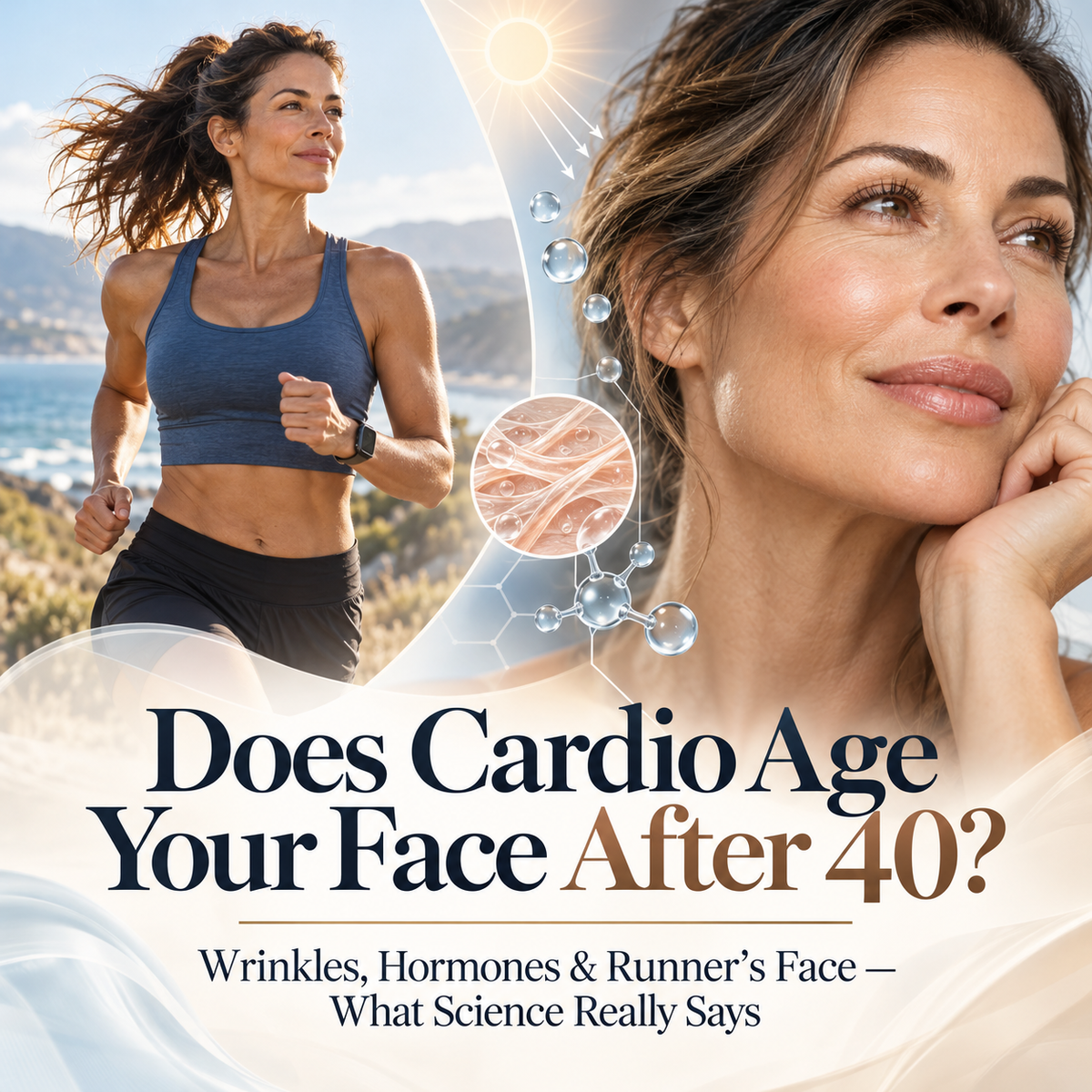
Does Cardio Age Your Face After 40? The Truth About Wrinkles, Collagen Loss & “Runner's Face”
Can too much cardio make you look older? Exploring the relationship between endurance exercise, facial fat loss, menopause, skin elasticity, and premature aging.
You've spent years taking care of your body. You eat well, exercise regularly, maintain a healthy weight, and stay committed to fitness.
But somewhere along the way, you notice something unexpected.
Your body looks leaner and more athletic—yet your face seems to be aging faster.
Your cheeks appear less full. Fine lines look deeper. Your skin doesn't seem as firm, and the youthful volume you once had is slowly disappearing.
Could your cardio routine be responsible?
The internet has given this phenomenon a name: “Runner's Face.”
But does running, cycling, or excessive cardio actually accelerate skin aging? Or are we confusing the effects of exercise with other biological changes that become increasingly important after 40?
The answer is more complicated—and far more interesting—than the popular myth suggests.
What Exactly Is “Runner's Face”?
The term runner's face describes the hollow, lean, or more heavily lined appearance sometimes associated with long-distance runners and endurance athletes.
Common features include:
-
Reduced fullness in the cheeks
-
More prominent nasolabial folds
-
Increased visibility of facial lines
-
Hollowing around the temples and eyes
-
Greater visibility of underlying facial structures
-
Skin laxity that becomes more noticeable with age
But here's the important distinction:
There is no convincing scientific evidence that the repeated bouncing motion of running directly breaks down facial collagen or causes wrinkles.
The more plausible explanations involve changes in facial fat, prolonged ultraviolet exposure, chronological aging, and, in some people, inadequate energy intake.
In other words, the problem may not be cardio itself—but the circumstances surrounding it.
1. Facial Fat Loss: Why Getting Leaner Can Make Your Face Look Older
One of the most overlooked components of facial aging is the gradual loss and redistribution of facial fat.
Youthful faces typically have strategically distributed fat compartments that contribute to smooth contours, fullness, and soft transitions between facial structures.
As we age, changes occur in the volume and position of these compartments, alongside changes in bone, ligaments, and skin.
This can make the cheeks appear flatter, the under-eye area more hollow, and folds around the mouth more noticeable.
Now add significant weight loss.
When cardio creates a sustained calorie deficit, overall body fat may decrease—including some of the subcutaneous fat that contributes to facial volume.
For someone already very lean, additional fat loss can make age-related structural changes more visible.
This is particularly relevant after 40, when facial volume and skin elasticity may already be declining.
Losing facial fullness can make wrinkles more noticeable without necessarily increasing the biological rate of skin aging.
A lean, athletic body and a fuller, youthful-looking face do not always develop in parallel.
And this is not unique to runners. Significant weight loss through dieting, other forms of exercise, or weight-loss medications may produce similar changes in facial appearance.
To better understand the structural mechanisms of facial aging, read our Complete Guide to Skin Aging & Collagen Loss.
2. After 40, Estrogen Changes the Skin-Aging Equation
For women, the transition through perimenopause and menopause introduces another powerful factor: declining estrogen.
Estrogen contributes to several essential aspects of skin physiology, including collagen production, dermal thickness, hydration, elasticity, and connective-tissue integrity.
As estrogen declines, skin may become thinner, drier, less elastic, and more prone to visible wrinkling.
Studies suggest women's skin may lose approximately 30% of its collagen during the first five years of menopause.
That's a substantial change in the structural framework responsible for skin firmness.
Now imagine this happening alongside substantial weight loss or a demanding endurance-training schedule.
Facial volume decreases while the skin's collagen support is also changing.
The result can be a more noticeably aged appearance—even when a woman is physically fit and metabolically healthy.
Cardio may receive the blame for changes that are largely influenced by hormones, age, and body composition.
This is why understanding skin aging after 40 requires looking beyond skincare products and exercise routines alone.
Related reading: Menopause and Skin Changes: What's Really Happening explores how hormonal changes influence collagen, hydration, elasticity, and barrier health.
3. Could Excessive Cardio Increase Oxidative Stress?
During exercise, working muscles use more oxygen and produce reactive oxygen species (ROS).
In excessive amounts, these molecules can damage cellular components, including proteins, lipids, and DNA.
Because oxidative stress is involved in skin aging, it's tempting to conclude that more cardiovascular exercise must accelerate wrinkle formation.
But that's an oversimplification.
Reactive oxygen species also serve as signaling molecules that stimulate beneficial physiological adaptations.
Regular exercise can improve the body's antioxidant defense systems and its ability to manage oxidative stress.
The concern arises when demanding training is combined with insufficient recovery, inadequate nutrition, or persistent physiological stress.
Even then, we don't have strong human evidence showing that high volumes of cardio independently accelerate facial wrinkling through oxidative stress.
More exercise is not automatically better when recovery and nutrition fail to keep pace.
Supporting Your Skin's Antioxidant Defenses
Skin is constantly exposed to oxidative stress from ultraviolet radiation, pollution, and other environmental influences.
Topical antioxidants can complement—but not replace—sun protection and healthy lifestyle habits.
Our SkinRequisite Vitamin C 18% Booster Serum features L-ascorbic acid, a form of vitamin C involved in collagen synthesis and antioxidant protection.
For a deeper explanation, explore Your Skin Is Under Attack—Every Single Day, where we discuss free radicals, environmental stress, and the biological foundations of visible skin aging.
4. The Sun Exposure Factor: The Hidden Cause Behind “Runner's Face”
Consider how many hours dedicated runners and cyclists spend outdoors.
Now consider the cumulative ultraviolet exposure over years—or decades.
Ultraviolet radiation is one of the most significant environmental contributors to premature skin aging.
Chronic sun exposure promotes changes associated with photoaging, including:
-
Collagen degradation
-
Abnormal elastin accumulation, known as solar elastosis
-
Increased skin roughness
-
Uneven pigmentation
-
Loss of elasticity
-
Deepening wrinkles
UV exposure activates molecular pathways involved in the breakdown of collagen and other components of the extracellular matrix.
A marathon runner who spends years training outdoors without adequate sun protection may develop more visible photoaging than someone who performs most of their exercise indoors.
But that doesn't mean running caused the damage.
The ultraviolet exposure did.
For outdoor athletes, daily broad-spectrum SPF 30 or higher, protective clothing, and appropriate sunscreen reapplication are essential parts of an anti-aging strategy.
Read more about preventing environmental damage in our article Premature Aging & the Hidden Cost of Mainstream Skincare.
5. What Science Actually Says About Exercise and Skin Aging
Here's where the popular narrative becomes particularly interesting.
What if exercise doesn't accelerate skin aging at all—and certain forms may actually improve aspects of skin structure?
A study published in Scientific Reports in 2023 examined the effects of aerobic and resistance exercise training on skin aging in middle-aged women.
Researchers compared 16 weeks of aerobic training with 16 weeks of resistance training.
Both forms of exercise improved skin elasticity and upper dermal structure.
Resistance training produced an additional improvement in dermal thickness.
Researchers also identified changes in circulating inflammatory factors and signaling pathways associated with the skin's extracellular matrix.
These findings challenge the idea that aerobic exercise inherently damages skin.
However, the study was relatively small, lasted only 16 weeks, and did not establish whether either training approach prevents facial wrinkles over decades.
Exercise may support biological processes involved in maintaining healthier skin—not simply accelerate their decline.
6. Why Strength Training Deserves More Attention After 40
Cardiovascular exercise is excellent for heart health, endurance, and metabolic function.
But strength training provides benefits that become particularly important during midlife.
Resistance exercise helps preserve muscle mass, strength, and physical function as we age.
Maintaining muscle is also important for glucose regulation, metabolic health, and body composition.
Emerging research suggests resistance training may positively influence skin structure through systemic signaling mechanisms.
Muscle is not merely tissue that produces movement.
It also functions as an endocrine organ, releasing signaling molecules known as myokines that communicate with other tissues.
Scientists are increasingly investigating how exercise-related signals influence inflammation, metabolism, and aging.
This doesn't mean lifting weights will replace skincare or reverse wrinkles.
But it reinforces an important concept:
Healthy aging involves preserving the body's functional tissues—not simply maximizing calorie expenditure.
For women over 40, an intelligent fitness program should incorporate resistance training alongside cardiovascular activity.
Not one at the expense of the other.
7. Can Being Extremely Lean Make Wrinkles More Visible?
Yes—particularly when reduced facial fullness accompanies normal age-related changes in skin structure.
Body fat serves many important physiological functions.
While excessive visceral fat is associated with cardiometabolic risks, subcutaneous fat also has structural and protective roles.
In the face, fat compartments contribute to contour and perceived youthfulness.
When these compartments lose volume, existing fine lines, folds, and hollows may become more prominent.
This doesn't mean everyone should intentionally gain weight to preserve facial volume.
Nor does it mean a particular body-fat percentage guarantees youthful skin.
Facial appearance is influenced by genetics, age, hormones, skeletal structure, weight history, and individual fat distribution.
The important consideration is avoiding unnecessary or aggressive fat loss when someone is already at a healthy weight—particularly if doing so compromises nutrition, recovery, or hormonal health.
A lower number on the scale doesn't always translate into a healthier or more youthful appearance.
8. The Overlooked Connection Between Nutrition, Recovery, and Skin
Skin is a metabolically active organ that depends on adequate nutrition to maintain its structure and function.
Collagen synthesis requires amino acids and essential cofactors.
Skin barrier maintenance depends on sufficient energy, essential fatty acids, and micronutrients.
Recovery processes also require adequate sleep and overall nutritional support.
When an individual's exercise expenditure consistently exceeds energy intake, the body may begin prioritizing essential physiological functions over others.
In athletes, prolonged low energy availability can contribute to Relative Energy Deficiency in Sport (RED-S), a condition associated with impaired physiological function.
The relationship between RED-S and facial wrinkles has not been established.
Nevertheless, chronic under-fueling is not a desirable strategy for healthy aging.
Exercise should support the body—not constantly demand more than it can recover from.
9. How Much Cardio Is Actually Beneficial After 40?
There is no scientifically established number of cardio minutes at which exercise begins accelerating facial aging.
The World Health Organization recommends adults aim for 150–300 minutes of moderate-intensity aerobic activity per week, or 75–150 minutes of vigorous activity, or an equivalent combination.
Muscle-strengthening activities involving major muscle groups are also recommended at least two days each week.
These guidelines focus on health outcomes—not cosmetic appearance.
For those over 40, a balanced routine may combine brisk walking, cycling, swimming, or running with progressive resistance training.
The ideal program supports cardiovascular fitness, muscle preservation, adequate recovery, and sustainable nutrition.
10. How to Protect Your Skin When You're Active After 40
At SkinRequisite, we believe skincare should work alongside a healthy lifestyle.
Exercise and topical skincare address different aspects of aging, and neither replaces the other.
Step 1: Protect Against UV Damage
Broad-spectrum sunscreen is foundational for anyone exercising outdoors.
Use SPF 30 or higher and reapply as directed, especially when sweating.
Antioxidant skincare can complement sunscreen, but cannot replace it.
For antioxidant support, explore our Vitamin C 18% Booster Serum.
Step 2: Replenish Hydration
Sweating, frequent cleansing, environmental exposure, and hormonal changes can contribute to dryness or discomfort.
Humectants such as hyaluronic acid help attract and retain water, temporarily improving the appearance of dehydration-related fine lines.
Our Hyaluronic Acid Hydration Serum is designed to support skin hydration without a heavy texture.
Follow with an appropriate moisturizer to help reduce moisture loss.
Step 3: Support the Skin Barrier
Aging skin may become less efficient at retaining moisture, particularly during menopause.
Ceramides, glycerin, emollients, and barrier-supportive moisturizers can help maintain comfortable, resilient skin.
For daily hydration and antioxidant-focused care, explore our True Radiance Antioxidant Moisturizer.
For additional nourishment, consider the Bilberry Antioxidant Moisturizer.
Step 4: Choose Your Active Ingredients Intelligently
Not all visible signs of aging have the same cause.
Dehydration lines differ from deep wrinkles caused by structural aging. Pigmentation changes differ from volume loss.
For visible dullness and uneven tone, topical vitamin C may help.
For hydration-related fine lines, hyaluronic acid can improve the skin's surface appearance.
For barrier care, moisturizers and appropriate emollients can support resilience.
None of these products can restore substantial lost facial fat.
And that distinction is important.
For more guidance on selecting compatible ingredients, read Vitamin C vs. Niacinamide: Which One Actually Transforms Your Skin?.
Frequently Asked Questions
Does running cause wrinkles after 40?
There is no convincing evidence that running itself directly causes facial wrinkles. Age-related collagen changes, facial fat loss, and cumulative UV exposure are more plausible explanations for the appearance called “runner's face.”
Can too much cardio make your face look older?
It may indirectly change facial appearance if it contributes to substantial weight loss, particularly in someone who is already lean. However, that's different from proving that cardio accelerates biological skin aging.
Does cardio destroy collagen?
Human research doesn't support the broad claim that cardiovascular exercise destroys skin collagen. In fact, a small 2023 study found improvements in certain skin-aging measures following aerobic training.
Is weightlifting better than cardio for skin aging?
Both are beneficial for overall health. Preliminary research suggests both may benefit skin structure, but long-term comparisons of facial wrinkle outcomes are lacking.
Why does my face look thinner after 40?
Potential contributors include age-related facial fat redistribution, changes in bone and connective tissue, weight loss, and hormonal changes.
Should women over 40 stop doing intense cardio?
No. Intense cardiovascular exercise can be appropriate and beneficial for many healthy women. Training volume should reflect fitness, health status, recovery, and nutritional intake—not fear of wrinkles.
The SkinRequisite Perspective: Train for Longevity, Care for Your Skin
The conversation about cardio and aging has become unnecessarily polarized.
On one side, exercise is celebrated as the ultimate anti-aging intervention.
On the other, intense cardio is blamed for hollow cheeks, wrinkles, and premature facial aging.
The biology is more nuanced.
Cardiovascular exercise can improve health and support beneficial physiological adaptations.
Resistance training helps preserve muscle and functional capacity.
Hormones influence skin collagen and hydration.
Body composition influences facial volume.
And cumulative sun exposure remains one of the most significant preventable causes of visible skin aging.
At SkinRequisite, our philosophy is rooted in understanding these mechanisms rather than chasing simplistic beauty myths.
Our approach emphasizes thoughtful formulation, antioxidant care, hydration, and skin-barrier support.
Explore more evidence-informed skincare education in the SkinRequisite News & Skin Science Blog.
The Bottom Line: Does Cardio Really Age You Faster?
No convincing evidence shows that cardio itself accelerates facial wrinkling after 40.
However, significant fat loss, hormonal changes, chronic sun exposure, and inadequate recovery can influence how old the face appears.
For women navigating midlife, these factors may occur simultaneously.
The solution isn't to abandon cardio.
It's to train intelligently, preserve muscle, fuel adequately, protect skin from UV radiation, and recognize that healthy aging is about far more than remaining as lean as possible.
Your body deserves strength and longevity. Your skin deserves science—not myths.
SkinRequisite — Where Nature Meets Performance for Health-Conscious Beauty.
Explore SkinRequisite Skincare
Scientific References
-
Nishikori S, et al. Resistance training rejuvenates aging skin by reducing circulating inflammatory factors and enhancing dermal extracellular matrices. Scientific Reports, 2023. https://doi.org/10.1038/s41598-023-37207-9
-
American Academy of Dermatology. Caring for Your Skin in Menopause. https://www.aad.org/public/everyday-care/skin-care-secrets/anti-aging/skin-care-during-menopause
-
World Health Organization. WHO Guidelines on Physical Activity and Sedentary Behaviour.https://www.who.int/publications/i/item/9789240015128
-
American Academy of Dermatology. 11 Ways to Reduce Premature Skin Aging.https://www.aad.org/public/everyday-care/skin-care-secrets/anti-aging/reduce-premature-aging-skin

Written by Kamila Starczewska

Leave a comment
This site is protected by hCaptcha and the hCaptcha Privacy Policy and Terms of Service apply.