
Your Skin Is Under Attack—Every Single Day
You can’t see it.
You don’t feel it immediately.
But it’s happening constantly.
Free radical damage is one of the primary drivers of skin aging.
And most people are completely unaware of it.
Every day, your skin is exposed to:
-
UV radiation
-
Pollution
-
Inflammation
-
Poor diet (high sugar, processed oils)
These factors generate free radicals—unstable molecules that damage healthy skin cells.
What Are Free Radicals?
Free radicals are unstable molecules missing an electron.
To stabilize themselves, they steal electrons from healthy skin cells.
This process is called:
👉 Oxidative stress
And it leads to:
-
Cellular damage
-
DNA disruption
-
Protein breakdown (including collagen)
To understand how this connects to deeper aging mechanisms, explore: GLYCATION & SKIN AGING: HOW SUGAR SILENTLY DESTROYS COLLAGEN
How Free Radical Damage Ages Your Skin
1. Collagen Breakdown
Free radicals degrade collagen—the structural protein responsible for firm, youthful skin.
Over time, this leads to:
-
Fine lines
-
Wrinkles
-
Skin laxity
To understand collagen’s role more deeply:
COLLAGEN SKIN AGING: WHY STRUCTURE DETERMINES HOW YOU AGE
2. Lipid Barrier Damage
Your skin barrier is made of lipids that protect against water loss and external stress.
Free radicals attack these lipids, leading to:
-
Dryness
-
Sensitivity
-
Increased inflammation
If your skin feels reactive or your moisturizer isn’t working, this may be why:
DOES YOUR MOISTURIZER MAKE YOU AGE FASTER?
3. Cellular Energy Decline
Oxidative stress damages mitochondria—the energy source of your skin cells.
When this happens:
-
Skin repair slows
-
Regeneration decreases
-
Aging accelerates
This is where CoQ10 becomes essential:
COQ10 IN SKINCARE THE UNDERRATED ANTI-AGING ANTIOXIDANT
Signs of Free Radical Damage
You may already be experiencing oxidative stress if you notice:
-
Dull, tired-looking skin
-
Uneven tone
-
Fine lines appearing faster
-
Increased sensitivity
-
Slower healing
These are not random—they are biological signals of cellular stress.
The Biggest Sources of Free Radical Damage
1. UV Exposure
The number one source of oxidative stress.
Even short daily exposure contributes to cumulative damage.
2. Pollution
Environmental toxins penetrate the skin and generate free radicals.
3. Diet
High sugar intake contributes to both:
-
Free radical formation
-
Glycation (double damage)
4. Chronic Inflammation
Stress, poor sleep, and internal imbalance increase oxidative load.
How to Protect Your Skin From Free Radical Damage
1. Use Antioxidants Daily
Antioxidants neutralize free radicals before they damage your skin.
Key ingredients:
-
CoQ10
-
Vitamin C
-
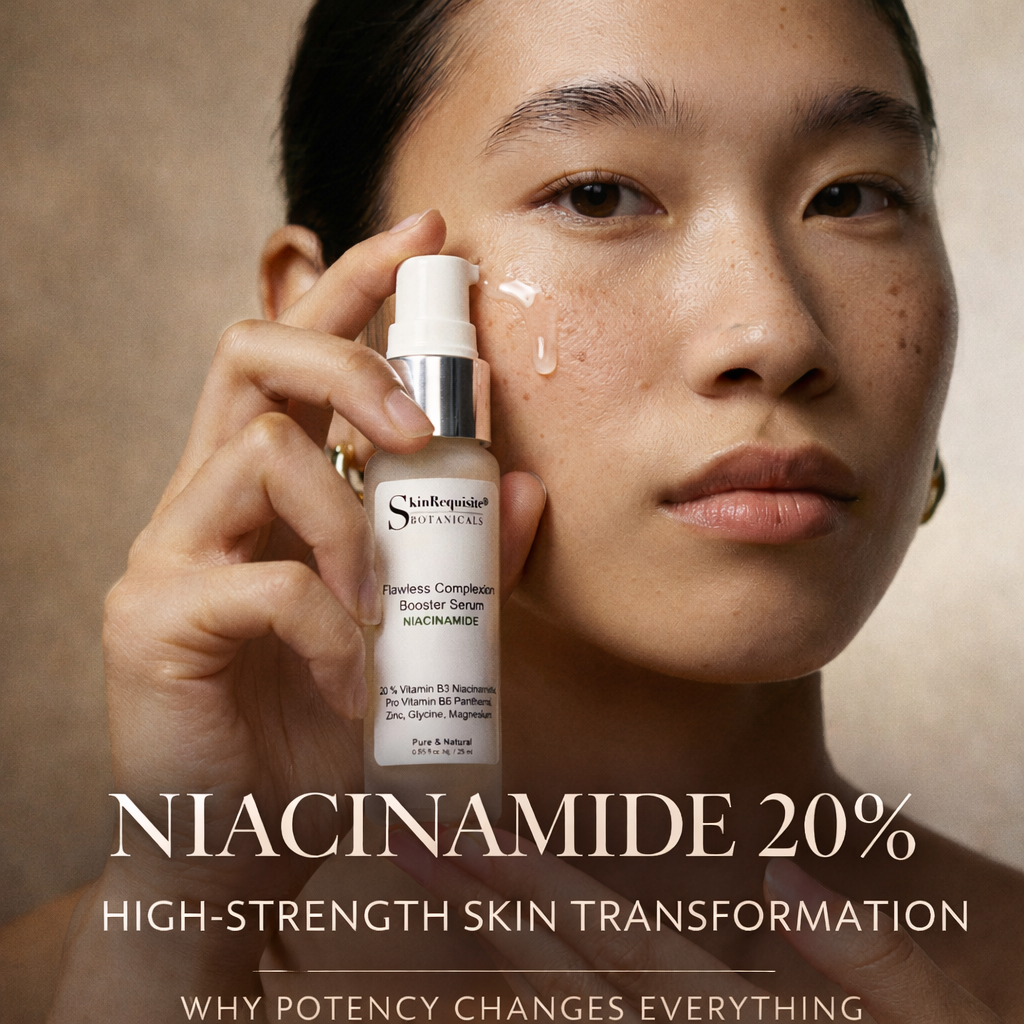
Niacinamide
-
Botanical polyphenols
2. Support Your Skin Barrier
A strong barrier reduces penetration of environmental stressors.
Focus on:
-
Lipid-rich formulations
-
Barrier-repair ingredients
3. Reduce Internal Stressors
-
Lower sugar intake
-
Improve sleep
-
Reduce inflammation
4. Think Beyond Surface Skincare
Most products only hydrate.
Real anti-aging happens at the cellular level.
SkinRequisite Approach: Defense + Performance
At SkinRequisite, we don’t just treat symptoms.
We formulate to:
-
Neutralize oxidative stress
-
Support mitochondrial function
-
Protect collagen integrity
-
Strengthen the skin barrier
Because true skin longevity requires protection + performance.
The Bottom Line
Free radical damage is not optional.
It’s happening whether you address it or not.
The difference is:
-
Accelerated aging
or -
Protected, resilient skin

Written by Kamila Starczewska

Leave a comment
This site is protected by hCaptcha and the hCaptcha Privacy Policy and Terms of Service apply.