YOUR SKIN ROUTINE MIGHT BE AGING YOU FASTER
The hidden mistakes that quietly accelerate wrinkles, dullness, and skin fatigue
You Might Be Doing Everything “Right”—And Still Aging Your Skin
Many people believe that using more advanced products automatically leads to better results.
More actives.
More exfoliation.
More steps.
More intensity.
But here’s the truth:
An aggressive routine can quietly accelerate aging.
Not immediately.
Not dramatically.
But gradually—through inflammation, dehydration, and barrier damage.
And over time, skin begins to show:
- Fine lines earlier
- Persistent dullness
- Sensitivity
- Uneven texture
- Slower healing
- Loss of resilience
This isn’t because your skin is aging faster naturally.
It’s because your routine is pushing it beyond its capacity.
The Real Driver of Premature Aging: Chronic Skin Stress
Skin ages faster when it is constantly stressed.
That stress often comes from well-intentioned routines built around correction instead of support.
Common stressors include:
- Over-exfoliation
- Too many actives
- Harsh cleansers
- Inconsistent hydration
- Ignoring barrier repair
- Frequent product switching
These patterns trigger low-grade inflammation—often called inflammaging—one of the most important mechanisms behind premature skin aging.
Internal link:
→ Free Radical Damage & Skin Aging: The Silent Accelerator
The 7 Routine Mistakes That Can Age Your Skin Faster
1. Over-Exfoliating the Skin
Exfoliation can improve texture and clarity.
But excessive exfoliation:
- Damages the barrier
- Increases sensitivity
- Disrupts hydration
- Accelerates collagen breakdown
Healthy skin renews itself naturally.
Over-exfoliation interferes with that process.
Internal link:
→ Signs You’ve Over-Exfoliated (And How to Fix It)
2. Using Too Many Active Ingredients at Once
Layering multiple actives is one of the most common causes of skin instability.
Examples:
- Vitamin C
- Retinol
- Glycolic acid
- Niacinamide
- Peptides
- Exfoliating toners
Used aggressively together, they can:
- Trigger inflammation
- Increase redness
- Damage the barrier
- Reduce skin resilience
Correction requires stability first.
3. Ignoring Barrier Repair
Many routines focus on correction but skip support.
Without barrier repair:
- Hydration escapes
- Irritation increases
- Healing slows
- Aging accelerates
This is why barrier health is foundational in every SkinRequisite protocol.
Internal link:
→ Why Your Moisturizer Isn’t Working (Barrier Damage Explained)
4. Using Cleansers That Are Too Harsh
Cleansing should remove impurities—not remove protection.
Harsh cleansers can:
- Strip natural lipids
- Disrupt the microbiome
- Increase dryness
- Trigger inflammation
Over time, this weakens the skin’s ability to defend itself.
5. Skipping Daily Hydration
Hydration is not cosmetic—it is structural.
Dehydrated skin:
- Develops fine lines faster
- Looks dull
- Becomes fragile
- Repairs more slowly
Hydration supports elasticity and resilience.
Without it, skin ages more quickly.
6. Changing Products Too Frequently
Skin needs consistency to function properly.
Constantly switching products:
- Disrupts the barrier
- Confuses the skin
- Prevents adaptation
- Increases irritation
Stable routines produce stable skin.
7. Chasing Trends Instead of Skin Health
Trends often prioritize speed over sustainability.
Examples:
- Daily exfoliation
- High-percentage actives
- “Glass skin” routines
- Multi-step layering
These approaches can overwhelm the skin.
Healthy skin requires balance—not intensity.
How a Healthy Routine Slows Aging Instead
A supportive routine focuses on function.
Not force.
Not intensity.
Not trends.
Healthy routines prioritize:
- Barrier stability
- Hydration
- Inflammation control
- Consistency
- Protection
When these systems are supported, skin:
- Maintains elasticity longer
- Repairs more efficiently
- Retains moisture
- Ages more slowly
The SkinRequisite Approach: Support Before Correction
Your routine should strengthen the skin before asking it to perform.
This principle reflects your long-standing formulation philosophy:
Repair → Stabilize → Correct → Maintain
A Smarter Routine That Protects Against Premature Aging
Step 1 — Gentle Cleansing
Remove impurities without stripping natural lipids.
This preserves the barrier and reduces inflammation.
Step 2 — Restore Hydration
Use ingredients that support water balance:
- Hyaluronic acid
- Amino acids
- Humectants
- Electrolytes
Hydrated skin functions better—and ages more slowly.
Step 3 — Rebuild the Barrier
Barrier repair supports:
- Moisture retention
- Skin resilience
- Collagen protection
- Inflammation control
Recommended product:
Sea Buckthorn Plumping Radiance Cream
Supports:
- Lipid replenishment
- Barrier recovery
- Skin stability
- Natural radiance
Step 4 — Introduce Actives Strategically
Once the skin is stable:
Add targeted correction.
Examples:
- Vitamin C
- Niacinamide
- Peptides
- Gentle exfoliation
This is when actives produce real results.
Step 5 — Protect Daily
Protection prevents damage.
Most important:
- Sun protection
- Antioxidants
- Barrier support
Consistency matters more than intensity.
Early Signs Your Routine Is Aging Your Skin
Watch for:
- Persistent dryness
- Increased sensitivity
- Sudden breakouts
- Loss of glow
- Tightness after cleansing
- Slower healing
- Redness or irritation
These are early warning signals—not normal aging.
The Bottom Line
Your routine should support your skin.
Not stress it.
Not overwhelm it.
Not accelerate aging.
Healthy skin ages slowly because it is:
- Hydrated
- Stable
- Resilient
- Protected
Because aging is not just about time.
It’s about function.
FAQ Section
Can skincare products make skin age faster?
Yes. Overuse of actives, harsh cleansers, and frequent routine changes can damage the barrier and increase inflammation, which accelerates aging.
How do I know if my routine is too aggressive?
Common signs include dryness, redness, sensitivity, and persistent dullness.
What is the most important step to slow skin aging?
Protecting and repairing the skin barrier.
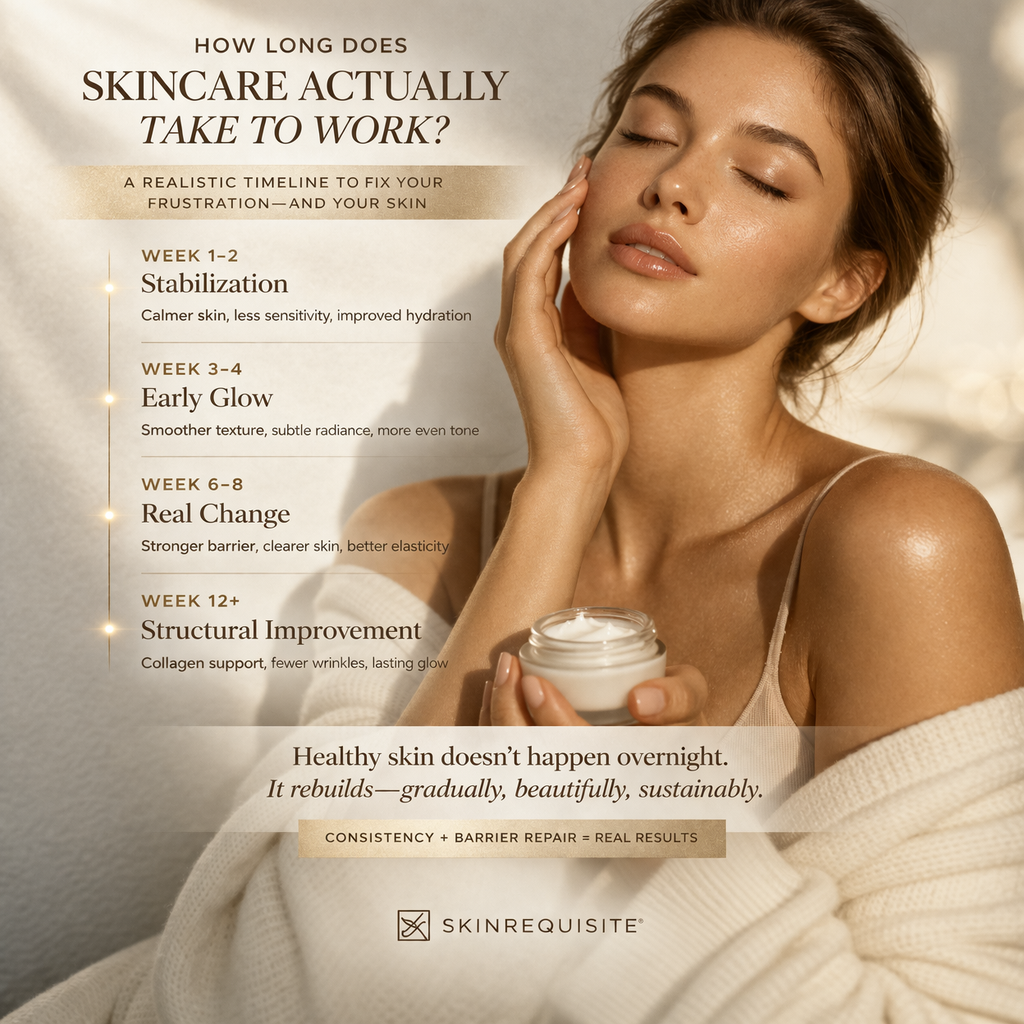
How long does it take to repair a damaged skin barrier?
Most people notice improvement within 2–6 weeks with consistent barrier support.

Written by Kamila Starczewska


Leave a comment
This site is protected by hCaptcha and the hCaptcha Privacy Policy and Terms of Service apply.