Stop Obsessing Over “Non-Comedogenic.” That’s Not Why You’re Breaking Out.
If you’re scanning ingredient lists looking for anything rated above a “2” on the comedogenic scale…
You’ve been distracted.
Most breakouts are not caused by a single “pore-clogging” ingredient.
They’re driven by inflammation, altered keratinization, sebaceous dysregulation, and immune signaling within the pilosebaceous unit.¹
And the comedogenic scale? It’s far less definitive than marketing suggests.
The Comedogenic Scale Is Based on Rabbit Ear Models
Much of the original comedogenicity data originated from rabbit ear assays conducted in the 1970s and 1980s.²
Rabbit ear follicular epithelium is significantly more reactive than human facial skin, making it prone to exaggerated microcomedone formation.³
Translation:
An ingredient rated “3” in a rabbit model does not automatically clog human pores.
Modern dermatology recognizes that these early models have limitations when applied directly to real-world human skin physiology.⁴
“Non-Comedogenic” Is Not a Strictly Regulated Term
In many regulatory frameworks, “non-comedogenic” does not require standardized global testing criteria.⁵
Brands may rely on:
-
Internal testing
-
Outdated data
-
Ingredient reputation
-
Marketing positioning
The label feels definitive.
The science is contextual.
What Actually Causes Comedones?


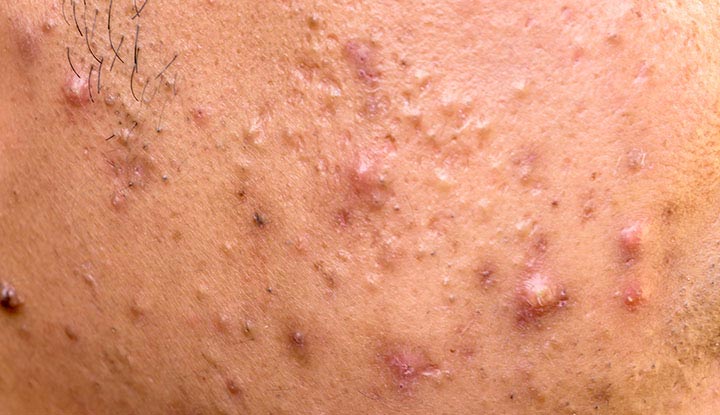
Acne pathogenesis involves four primary mechanisms:¹
-
Increased sebum production
-
Follicular hyperkeratinization
-
Cutibacterium acnes proliferation
-
Inflammatory cascade activation
Comedone formation begins with abnormal keratinocyte shedding within the follicle — not simply the presence of topical oils.⁶
Inflammation is now understood to be present even before visible lesions develop.⁷
This shifts the focus from ingredient fear to biological regulation.
Not All Oils Are Comedogenic in Practice
Comedogenicity depends on:
-
Concentration
-
Vehicle
-
Penetration profile
-
Oxidative stability
-
Individual sebum composition
Studies have demonstrated that certain lipid components can support barrier repair without increasing comedone formation in humans when properly formulated.⁸
Context matters more than isolated ingredient lists.
Barrier Damage Worsens Congestion
Excessive exfoliation and harsh cleansing increase transepidermal water loss (TEWL), impair barrier lipids, and amplify inflammatory mediators.⁹
Barrier disruption may increase follicular instability and exacerbate breakouts — even when products are labeled non-comedogenic.¹⁰
In other words:
Over-stripping can create the very congestion you’re trying to prevent.
The Real Takeaway
Comedogenicity is not binary.
It is influenced by:
-
Dose
-
Delivery system
-
Skin type
-
Sebum composition
-
Existing inflammation
-
Hormonal signaling
Clear skin is achieved by stabilizing:
-
Keratinocyte turnover
-
Sebaceous regulation
-
Inflammatory response
-
Barrier integrity
Not by eliminating entire ingredient categories based on outdated scales.
Marketing simplifies.
Skin biology does not.
References
-
Gollnick HPM. Pathogenesis and management of acne. J Am Acad Dermatol.
-
Fulton JE et al. Comedogenicity of current therapeutic products. J Soc Cosmet Chem.
-
Kligman AM. The rabbit ear assay revisited. Arch Dermatol.
-
Draelos ZD. Comedogenicity testing and human relevance. Dermatol Clin.
-
U.S. FDA Cosmetic Labeling Guidance – non-comedogenic claims.
-
Plewig G, Kligman AM. Acne and Rosacea. Springer.
-
Jeremy AHT et al. Inflammatory events precede acne lesion formation. Br J Dermatol.
-
Elias PM. Skin barrier function and lipid biology. J Invest Dermatol.
-
Voegeli R et al. Barrier disruption and acne pathophysiology. Skin Pharmacol Physiol.
-
Tan JKL. Irritation and acne exacerbation mechanisms. J Cutan Med Surg.

Written by Kamila Starczewska

Leave a comment
This site is protected by hCaptcha and the hCaptcha Privacy Policy and Terms of Service apply.