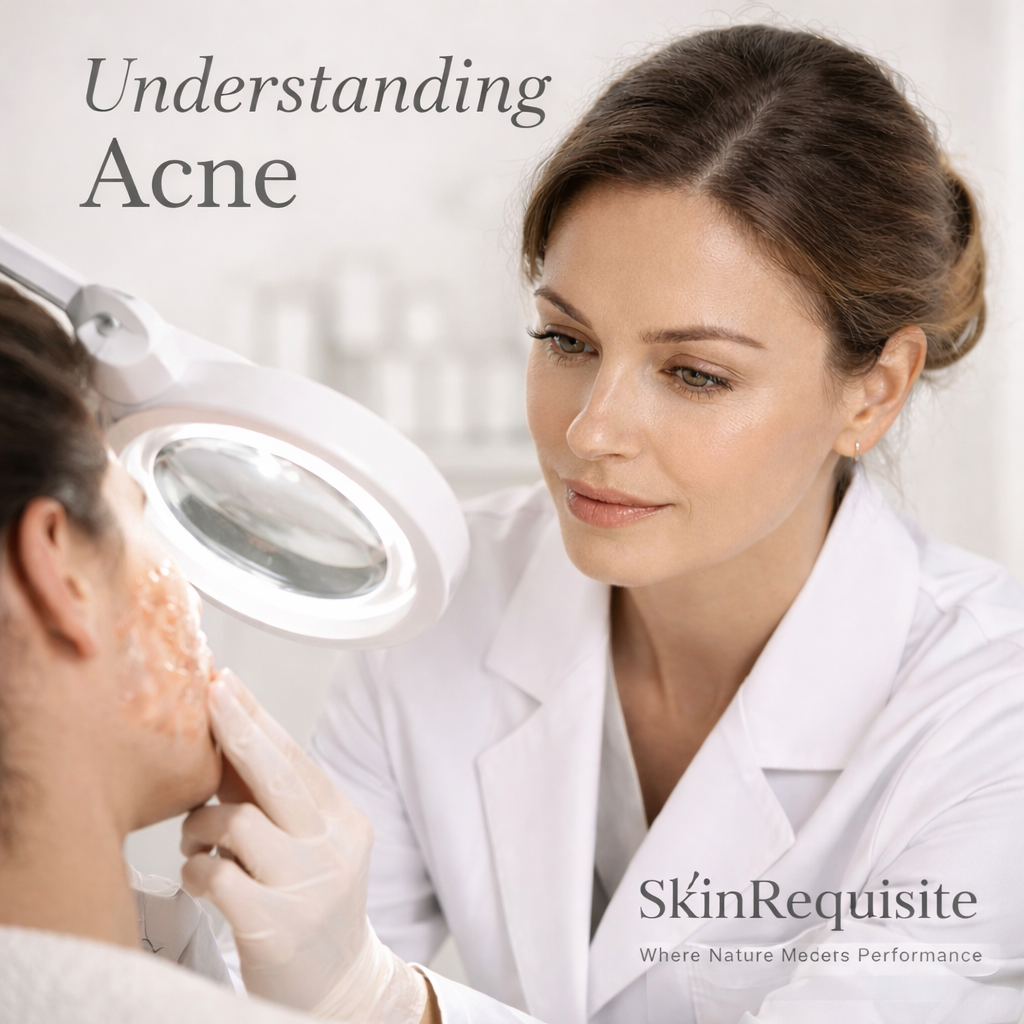
Evidence-Based Acne Treatment Guide
Acne is one of the most common skin concerns worldwide — yet it remains one of the most misunderstood.
Breakouts are not simply a hygiene issue.
They are not caused by “dirty skin.”
And they are rarely solved by aggressive stripping.
Acne is a multifactorial inflammatory condition — involving oil production, cellular turnover, bacteria, hormonal signaling, and barrier integrity.
Understanding the mechanism changes how we treat it.
What Actually Causes Acne?
Acne develops when four processes converge:
-
Excess sebum production
-
Abnormal keratinization (clogged pores)
-
Cutibacterium acnes overgrowth
-
Inflammation
When pores become clogged with excess oil and dead skin cells, bacteria can proliferate, triggering an immune response that leads to redness, swelling, and pustules.
But the root issue is often inflammation — not just oil.
Types of Breakouts
Whiteheads (Closed Comedones)
Clogged pores covered by skin.
Blackheads (Open Comedones)
Oxidized sebum visible at the surface.
Papules & Pustules
Inflamed red bumps, sometimes with visible pus.
Cystic Acne
Deeper, painful nodules often linked to hormonal imbalance.
Each type requires a slightly different approach — but all benefit from barrier support.
The Biggest Mistake: Over-Treating
Many acne routines rely on:
-
High-percentage benzoyl peroxide
-
Daily exfoliating acids
-
Alcohol-based toners
-
Harsh foaming cleansers
Initially, breakouts may reduce.
Long-term:
-
Barrier function weakens
-
Inflammation increases
-
Oil production rebounds
-
Sensitivity worsens
Compromised skin becomes reactive skin.
The Barrier-First Acne Strategy
1️⃣ Gentle Cleansing (Twice Daily)
Choose low-pH cleansers that remove debris without stripping lipids.
Over-cleansing signals skin to produce more oil.
2️⃣ Targeted Actives (Not Everything at Once)
Strategic ingredients that help acne-prone skin:
-
Salicylic Acid (BHA) – penetrates pores and dissolves oil buildup
-
Niacinamide – regulates sebum and reduces inflammation
-
Zinc – supports oil balance and calms redness
-
Azelaic Acid – helps with inflammation and post-acne pigmentation
Frequency matters more than strength.
For most skin types:
2–4 times per week is sufficient for exfoliating acids.
3️⃣ Don’t Skip Moisturizer
Acne-prone skin is often dehydrated.
Hydration:
-
Reduces inflammation
-
Improves tolerance to actives
-
Supports healing
-
Prevents rebound oil production
Lightweight, non-comedogenic formulations with ceramides and panthenol are ideal.
4️⃣ Sun Protection Is Non-Negotiable
UV exposure worsens:
-
Post-inflammatory hyperpigmentation
-
Inflammation
-
Collagen degradation
Mineral SPF with zinc oxide is typically well tolerated by acne-prone skin and supports calm barrier function.
Internal Triggers of Acne
Skincare is only part of the equation.
Acne can also be influenced by:
-
Hormonal fluctuations (androgens)
-
High glycemic diets
-
Chronic stress (cortisol elevation)
-
Poor sleep
-
Gut dysregulation
-
Certain medications
Skin reflects systemic balance.
Adult Acne: Why It’s Rising
Many adults — especially women — experience acne in their late 20s, 30s, and 40s.
Common reasons include:
-
Hormonal shifts
-
Overuse of aggressive actives
-
Barrier damage
-
Chronic stress
Adult acne often requires a more anti-inflammatory approach rather than high-strength drying agents.
Post-Acne Marks vs Scars
It’s important to distinguish:
-
Post-inflammatory hyperpigmentation (PIH) – flat discoloration
-
True acne scars – structural depressions
PIH responds well to:
-
Antioxidants
-
Azelaic acid
-
Gentle exfoliation
-
Daily SPF
Scarring often requires professional treatments like microneedling or laser therapy.
The Truth About “Acne-Fighting”
Clear skin is rarely achieved by attacking it.
Acne-prone skin needs:
-
Regulation
-
Anti-inflammatory support
-
Barrier repair
-
Strategic actives
-
Patience
When inflammation is controlled and barrier integrity restored, breakouts often reduce naturally.
Summary
Effective acne care focuses on:
-
Gentle cleansing
-
Controlled exfoliation
-
Anti-inflammatory ingredients
-
Hydration support
-
Mineral sun protection
-
Lifestyle awareness
Stripping creates imbalance.
Balanced physiology restores clarity.

Written by Kamila Starczewska


Leave a comment
This site is protected by hCaptcha and the hCaptcha Privacy Policy and Terms of Service apply.