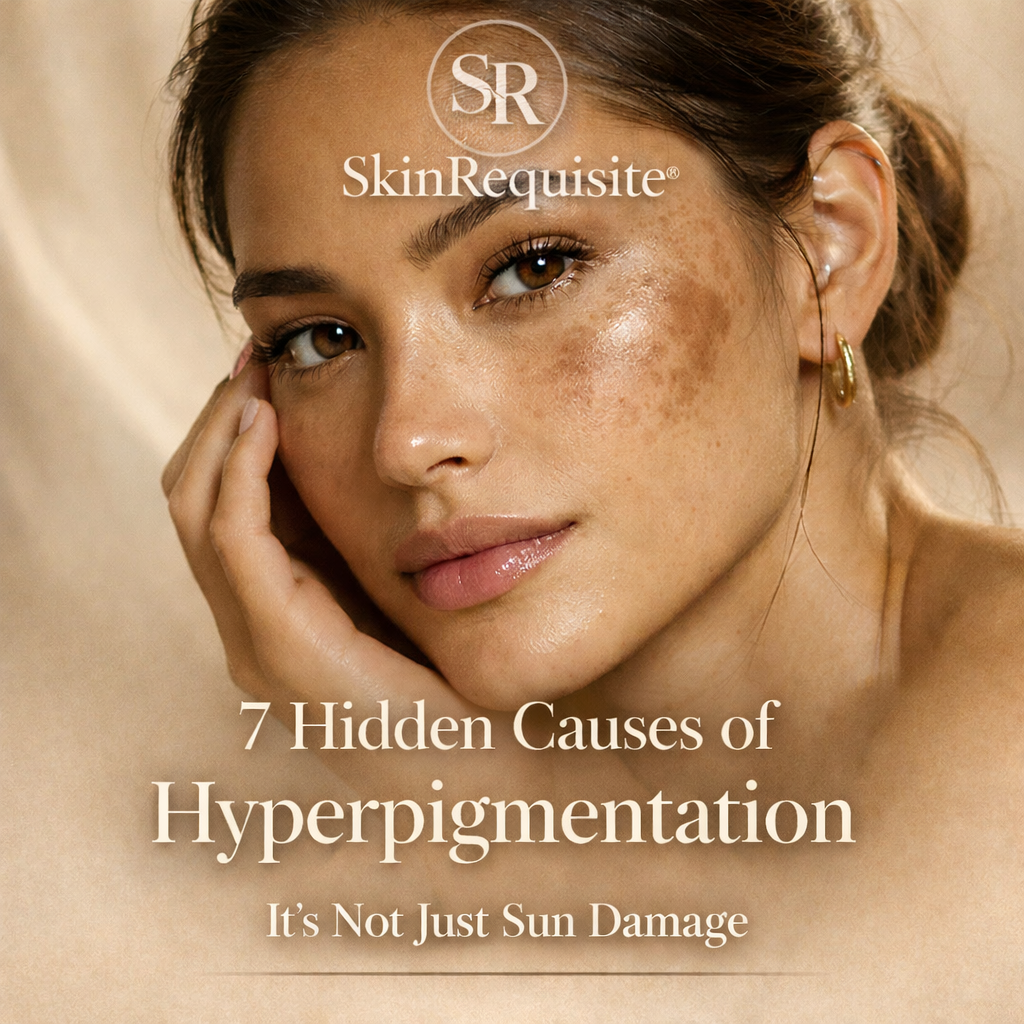
Hyperpigmentation: What Really Causes Dark Spots (And How to Correct Them)
Hyperpigmentation is one of the most common skin concerns worldwide—yet it is also one of the most misunderstood.
Most people blame dark spots entirely on sun exposure. While ultraviolet radiation plays a role, hyperpigmentation is rarely caused by a single factor.
In reality, pigmentation is often the result of chronic inflammation, skin barrier damage, oxidative stress, and metabolic factors that stimulate melanin production.
Understanding what drives hyperpigmentation is the first step toward correcting it.
If you haven't yet, read our deeper guide on skin inflammation and aging here:
👉 Inflammaging: The Silent Driver of Skin Aging
What Is Hyperpigmentation?
Hyperpigmentation occurs when melanocytes—the cells responsible for pigment production—begin producing excess melanin.
This often happens when the skin senses damage or inflammation.
Common types include:
• Post-inflammatory hyperpigmentation (PIH) — dark spots left after acne or irritation
• Melasma — hormonally driven pigmentation
• Sun spots (solar lentigines) — UV-induced pigment accumulation
• Diffuse uneven tone — subtle pigmentation caused by chronic skin stress
These pigment pathways are strongly influenced by inflammation and oxidative damage.
Learn more about how oxidative stress damages skin in our guide:
👉 Antioxidants: Your Skin's Secret Defense
1. Improper Skincare: A Major Cause of Hyperpigmentation
Ironically, hyperpigmentation is often made worse by skincare routines meant to fix it.
Over-exfoliation and harsh treatments can create chronic inflammation, which stimulates melanocytes.
Common skincare mistakes include:
• Using strong acids too frequently
• Combining multiple exfoliating ingredients
• Overusing retinoids on sensitive skin
• Harsh cleansers that strip the barrier
• Fragrance and irritants
• Skipping sunscreen
When the skin barrier becomes compromised, inflammatory signals increase melanin production.
This is why restoring barrier function is critical.
If your skin feels irritated, tight, or reactive, read:
👉 How to Repair a Damaged Skin Barrier
2. Sugar Consumption and Glycation
Diet can also influence pigmentation.
High sugar intake triggers glycation, a process where sugar molecules bind to proteins like collagen and elastin.
This forms Advanced Glycation End Products (AGEs).
AGEs:
• damage collagen
• increase oxidative stress
• trigger inflammatory pathways
• stimulate melanocytes
Over time, this contributes to dullness, uneven tone, and pigmentation.
We explore this in detail here:
👉 Glycation & Skin Aging: How Sugar Damages Collagen
3. Hydrogenated Oils and Inflammatory Diets
Processed foods rich in hydrogenated oils can increase systemic inflammation.
Inflammation activates enzymes like tyrosinase, which controls melanin production.
Common dietary triggers include:
• processed snack foods
• fried fast food
• margarine and hydrogenated oils
• ultra-processed packaged foods
Reducing inflammatory foods and increasing antioxidant-rich nutrients can support clearer skin.
4. Mineral Deficiencies and Pigmentation
Micronutrients play a key role in regulating skin health and pigment balance.
Several minerals support antioxidant systems that control oxidative stress.
Important minerals include:
Zinc
Supports skin healing and helps regulate inflammation.
Copper
Important for melanin regulation and antioxidant enzymes.
Selenium
Supports glutathione activity, one of the body's most powerful antioxidants.
Iron
Iron supports oxygen delivery and cellular repair processes.
5. Vitamin Deficiencies and Uneven Skin Tone
Certain vitamins play important roles in pigment regulation and skin repair.
Deficiencies may worsen hyperpigmentation.
Important vitamins include:
Vitamin C
Vitamin C helps inhibit tyrosinase, the enzyme responsible for melanin production.
It also supports collagen formation.
Our Vitamin C treatments support brighter, more even-looking skin:
👉 Explore SkinRequisite Vitamin C formulations
Vitamin A
Regulates skin cell turnover and helps disperse pigment.
Vitamin D
Low vitamin D levels are associated with inflammatory skin conditions.
Vitamin B12
Deficiency may contribute to irregular pigmentation patterns.
Foods That May Support Clearer Skin
Certain foods help support antioxidant defenses and reduce inflammation.
Examples include:
Antioxidant-rich foods
• blueberries
• pomegranate
• green tea
• dark leafy greens
Vitamin C-rich foods
• citrus fruits
• kiwi
• bell peppers
• strawberries
Zinc-rich foods
• pumpkin seeds
• oysters
• chickpeas
Carotenoid-rich foods
• carrots
• sweet potatoes
• mango
These nutrients support the skin's natural defense systems.
Why Skin Barrier Health Matters
Many pigmentation treatments fail because they ignore the skin barrier.
When the barrier is damaged:
• inflammation increases
• melanocytes become overactive
• pigmentation worsens
This is why SkinRequisite formulations prioritize:
• barrier-supportive ingredients
• anti-inflammatory botanicals
• antioxidant protection
• skin-compatible actives
If you want to understand the connection between collagen and skin strength, read:
👉 Collagen: The Structural Foundation of Skin
A Smarter Approach to Hyperpigmentation
Correcting hyperpigmentation requires addressing multiple factors simultaneously.
The most effective strategy includes:
-
Protecting the skin barrier
-
Reducing inflammation
-
Supporting antioxidant defenses
-
Improving diet and nutrient balance
-
Using targeted brightening ingredients carefully
Pigmentation is not simply a cosmetic concern.
It is often a visible signal that the skin is under stress.
Restore balance—and the skin begins to regain its natural clarity.
SkinRequisite Philosophy
At SkinRequisite, we believe skincare should work with the biology of the skin, not against it.
Instead of aggressive treatments that damage the barrier, our formulations support the skin's natural repair systems while addressing the underlying causes of pigmentation.
When inflammation is reduced, antioxidant defenses are restored, and the skin barrier is respected, pigmentation becomes far easier to correct.
True radiance begins with resilient, healthy skin.

Written by Kamila Starczewska


Leave a comment
This site is protected by hCaptcha and the hCaptcha Privacy Policy and Terms of Service apply.