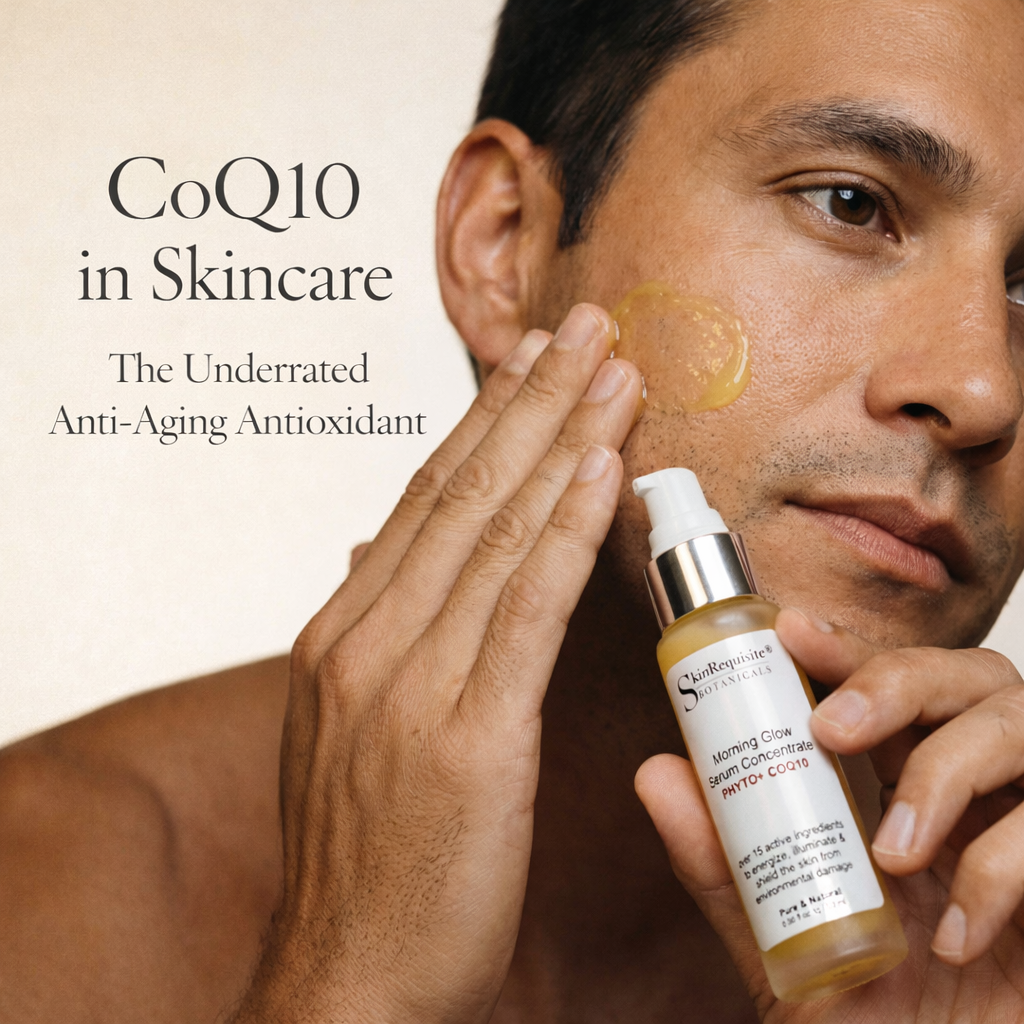
CoQ10 in Skincare The Underrated Anti-Aging Antioxidant
Coenzyme Q10 doesn’t make bold promises.
It doesn’t tingle, peel, or deliver overnight drama.
And that’s exactly why it works.
Often overshadowed by louder antioxidants, CoQ10 is one of the most biologically relevant, skin-compatible, and longevity-driven ingredients in skincare — especially for sensitive, stressed, or aging skin.
Here’s why it deserves far more attention than it gets.
What CoQ10 Actually Is
Coenzyme Q10 (also known as ubiquinone) is naturally present in every cell of the body, including the skin.
Its primary roles:
-
Supporting cellular energy (ATP production)
-
Neutralizing oxidative stress
-
Protecting cell membranes
-
Supporting collagen integrity
In healthy, youthful skin, CoQ10 is abundant.
But levels decline steadily with age — and faster with UV exposure, stress, and inflammation.
Why CoQ10 Declines (and Why That Matters)
As CoQ10 levels drop, skin cells become:
-
Less efficient at producing energy
-
More vulnerable to oxidative damage
-
Slower to repair
-
Less resilient overall
This shows up as:
-
Dullness
-
Fine lines
-
Loss of firmness
-
Increased sensitivity
Aging skin isn’t just losing collagen — it’s losing cellular efficiency.
CoQ10 addresses this at the source.
CoQ10 vs Other Antioxidants
Many antioxidants focus on neutralizing free radicals after damage has occurred.
CoQ10 does more.
It:
-
Helps prevent oxidative damage
-
Supports mitochondrial function
-
Enhances cellular repair processes
-
Works synergistically with other antioxidants
Rather than forcing change, CoQ10 supports skin’s natural defense systems.
This makes it especially valuable for skin that cannot tolerate aggressive actives.
Why CoQ10 Is Ideal for Sensitive & Aging Skin
One of CoQ10’s most underrated qualities is its exceptional tolerability.
Unlike some antioxidants that can:
-
Sting
-
Irritate
-
Trigger flushing
CoQ10 is:
-
Non-acidic
-
Non-photosensitizing
-
Non-exfoliating
-
Barrier-friendly
This makes it well-suited for:
-
Sensitive skin
-
Rosacea-prone skin
-
Menopausal skin
-
Barrier-impaired skin
Anti-aging doesn’t need to be inflammatory to be effective.
CoQ10 and Collagen Preservation
While CoQ10 doesn’t stimulate collagen in a harsh or aggressive way, it plays a critical role in protecting existing collagen.
By reducing oxidative stress, it helps:
-
Slow collagen breakdown
-
Preserve skin structure
-
Maintain elasticity over time
Preservation is often more important than stimulation — especially as skin matures.
Why CoQ10 Is a Longevity Ingredient
CoQ10 isn’t about quick fixes.
It works best when used:
-
Consistently
-
Long-term
-
As part of a barrier-supportive routine
Its effects are cumulative:
-
Improved skin resilience
-
More even tone
-
Healthier texture
-
Subtle firmness and vitality
This is skin aging well, not skin being forced to look younger.
Who Benefits Most From CoQ10
CoQ10 is especially beneficial if your skin is:
-
Dull or fatigued
-
Sensitive or reactive
-
Aging with inflammation
-
Post-procedure
-
Menopausal or hormonally changing
It’s also ideal for those who want anti-aging results without irritation.
How CoQ10 Fits Into a Barrier-First Routine
CoQ10 performs best when:
-
Paired with other antioxidants
-
Supported by lipids and hydration
-
Used daily, morning or night
It strengthens the skin’s ability to cope with stress — rather than creating more of it.
The Bigger Picture
Not every effective ingredient announces itself with visible reaction.
Some work quietly — strengthening skin from within.
CoQ10 belongs in that category.
It doesn’t chase trends.
It supports skin biology.
And that’s what makes it one of the most underrated anti-aging ingredients in skincare.
Final Thought
Aging skin doesn’t need to be shocked into youth.
It needs energy, protection, and calm.
CoQ10 delivers exactly that — without compromise.

Written by Kamila Starczewska

Leave a comment
This site is protected by hCaptcha and the hCaptcha Privacy Policy and Terms of Service apply.