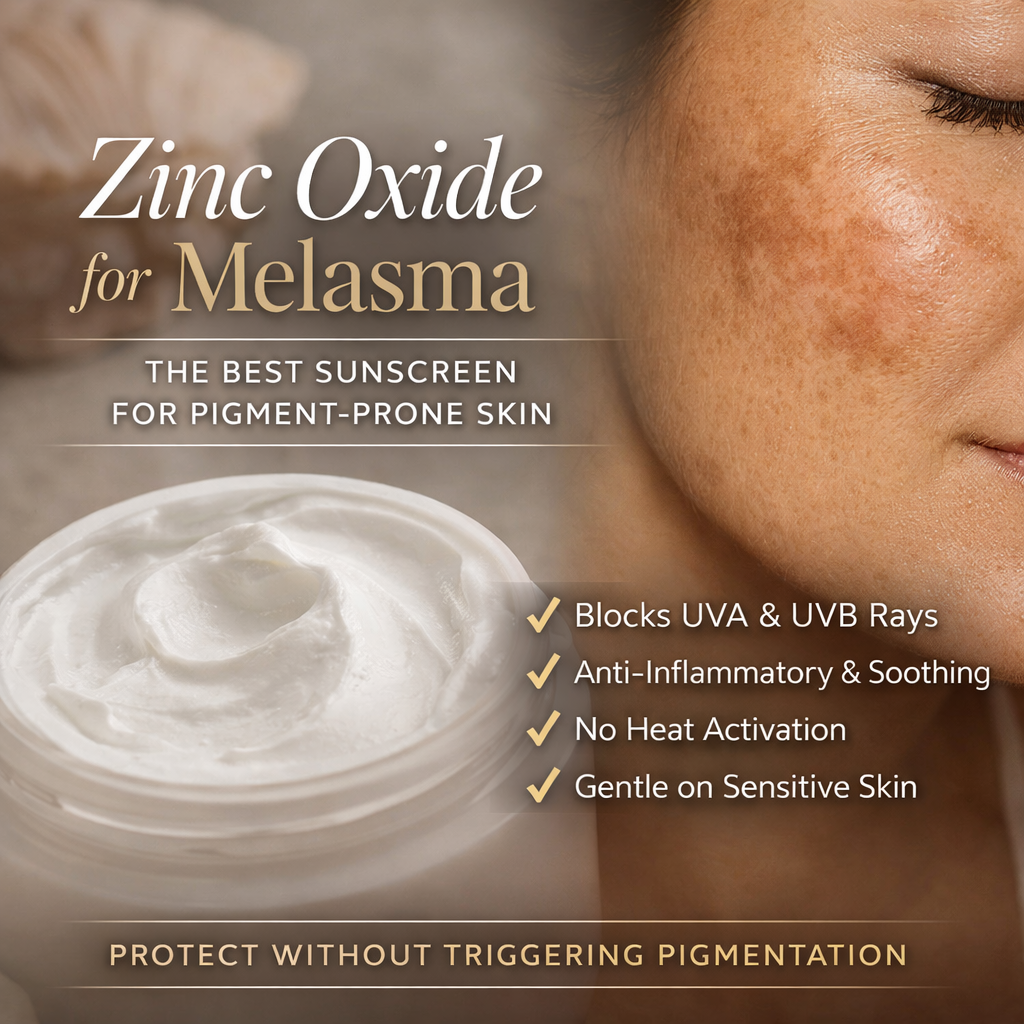
Zinc Oxide for Melasma: Why Mineral Sunscreen Is the Gold Standard
Melasma is not simply a cosmetic concern. It is a chronic, inflammation-driven pigmentation disorder influenced by UV exposure, visible light, hormonal shifts, and — importantly — heat.
If you struggle with melasma, your sunscreen is not just protection.
It is part of your treatment strategy.
At SkinRequisite, we recommend physical (mineral) sunscreens containing Zinc Oxide for those managing melasma. Here’s why.
Understanding How Melasma Is Triggered
Melasma develops when melanocytes (pigment-producing cells) become overstimulated. This can happen due to:
-
UVA and UVB exposure
-
Infrared heat
-
Hormonal fluctuations
-
Inflammation
-
Skin barrier disruption
Because melasma is highly reactive to heat and inflammation, even small triggers can prolong discoloration.
This is where sunscreen type becomes critically important.
Chemical Sunscreens: How They Work
Chemical (organic) sunscreens such as avobenzone, octinoxate, and oxybenzone function by:
-
Absorbing UV radiation
-
Converting UV rays into heat
-
Releasing that heat from the skin
While they are effective at preventing sunburn, this UV-to-heat conversion may not be ideal for melasma-prone skin.
Heat is a known stimulator of melanocytes. For individuals sensitive to heat-induced pigmentation, this mechanism can potentially aggravate flare-ups rather than calm them.
Chemical sunscreens are not “bad” — but they may not be the most strategic option for pigment-reactive skin.
Physical (Mineral) Sunscreens: A Different Mechanism
Mineral sunscreens contain:
-
Zinc Oxide
-
Titanium Dioxide
Instead of absorbing UV rays, they work by:
-
Reflecting and scattering UV radiation
-
Sitting on the surface of the skin
-
Providing immediate protection
Because they do not rely on internal UV absorption and conversion in the same way, they are generally better tolerated by sensitive and melasma-prone skin.
Why Zinc Oxide Is Superior for Melasma
Zinc Oxide offers several unique advantages:
1. Broad Spectrum Protection
It provides coverage against both UVA and UVB rays — including long-wave UVA, which penetrates deeper and significantly contributes to pigmentation.
2. Anti-Inflammatory Properties
Zinc is naturally soothing. It helps calm redness, irritation, and inflammatory responses that can worsen hyperpigmentation.
3. Barrier Support
Melasma-prone skin often has a compromised barrier. Zinc oxide is non-sensitizing and supportive of skin integrity.
4. Gentle on Sensitive Skin
It is well tolerated by reactive, rosacea-prone, and post-procedure skin.
For those managing melasma, this combination of protection + calming support is essential.
The Role of Titanium Dioxide
Titanium Dioxide enhances UVB and short-wave UVA protection. When paired with zinc oxide, it strengthens overall mineral defense.
However, zinc oxide remains the gold standard for comprehensive UVA protection — a critical factor in melasma management.
The SkinRequisite Philosophy
At SkinRequisite, we believe protection should calm — not provoke.
When skin is pigment-reactive, inflamed, or barrier-compromised, formulation strategy matters. Zinc Oxide aligns with our barrier-first approach: protect intelligently, reduce inflammation, and support the skin’s physiology.
Melasma requires consistency, patience, and the right tools.
Mineral sunscreen — especially one rich in Zinc Oxide — is one of the most powerful daily tools you can use.

Written by Kamila Starczewska

Leave a comment
This site is protected by hCaptcha and the hCaptcha Privacy Policy and Terms of Service apply.