Peptides in Skincare: Hype or Real Anti-Aging Power?
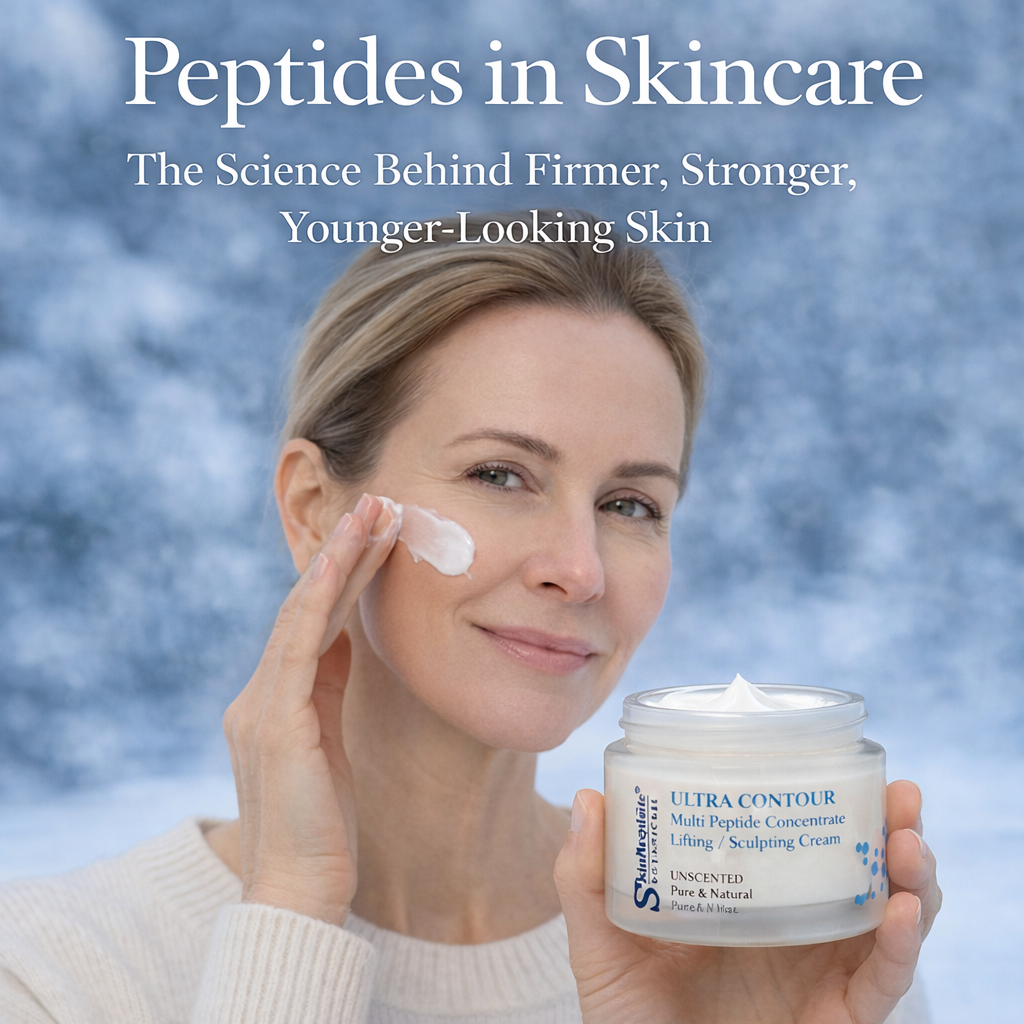
Peptides in Skincare: The Science Behind Firmer, Stronger, Younger-Looking Skin
If you’ve been paying attention to modern skincare, you’ve seen one word everywhere:
Peptides.
They’re in serums.
They’re in creams.
They’re marketed as “Botox in a bottle.”
But what are peptides in skincare really doing — and do they actually support firmer, younger-looking skin?
Let’s break it down scientifically.
What Are Peptides in Skincare?
Peptides are short chains of amino acids — the building blocks of proteins like:
-
Collagen
-
Elastin
-
Keratin
Collagen is the structural protein responsible for firmness and elasticity. As we age, collagen production naturally declines. This leads to:
-
Fine lines
-
Loss of firmness
-
Reduced elasticity
-
Thinning skin
Topical peptides are designed to signal the skin to support its natural repair and collagen-producing pathways.
In other words:
They don’t “add collagen.”
They encourage your skin to behave younger.
How Peptides Work on Aging Skin
Different peptides have different biological roles. Not all peptides are created equal.
Here are the main categories used in high-performance skincare:
1️⃣ Signal Peptides
These peptides tell skin cells to produce more collagen and elastin.
Examples:
-
Palmitoyl Tripeptide-5
-
Palmitoyl Pentapeptide-4
They support structural integrity and help improve visible firmness over time.
2️⃣ Neurotransmitter-Inhibiting Peptides
Often marketed as “Botox-like peptides.”
Example:
-
Argireline (Acetyl Hexapeptide-8)
These peptides help reduce muscle contraction signals, softening the appearance of expression lines.
They do not replace injectables — but they can visibly smooth dynamic lines with consistent use.
3️⃣ Carrier Peptides
These deliver trace elements like copper to support wound healing and collagen synthesis.
Example:
-
Copper peptides (GHK-Cu)
They assist in skin regeneration and improve overall skin resilience.
4️⃣ Enzyme-Inhibiting Peptides
These help slow the breakdown of collagen caused by environmental stress and UV exposure.
Supporting long-term structural preservation is just as important as stimulation.
Do Peptides Actually Work?
Yes — when formulated correctly.
Clinical research shows that certain peptides can:
-
Support collagen production
-
Improve skin elasticity
-
Reduce wrinkle depth
-
Enhance barrier repair
However, peptide effectiveness depends on:
-
Concentration
-
Stability
-
Delivery system
-
Supporting ingredients
A peptide cream filled with silicones and fillers may feel smooth — but won’t deliver meaningful biological support.
Peptides vs Retinol: Which Is Better?
This is one of the most searched skincare questions.
Retinol works by accelerating cell turnover and stimulating collagen.
Peptides work by signaling collagen production and supporting repair.
The key difference?
Retinol can irritate.
Peptides typically support without overstimulation.
For sensitive or barrier-compromised skin, peptides often provide a safer long-term strategy for visible firmness.
Many advanced routines use both — strategically.
Benefits of Peptides in Skincare
When formulated properly, peptides can:
✔ Improve visible firmness
✔ Support collagen integrity
✔ Reduce fine lines
✔ Improve skin texture
✔ Strengthen the barrier
✔ Enhance elasticity
✔ Support long-term structural resilience
But results require consistency.
Peptides are not instant fillers.
They are long-game architecture.
Who Should Use Peptides?
Peptides are ideal for:
-
Early signs of aging
-
Loss of elasticity
-
Fine lines and dynamic wrinkles
-
Sensitive skin
-
Post-procedure recovery
-
Barrier-compromised skin
They are suitable for all skin types, including sensitive skin.
What to Look for in a Peptide Cream
When shopping for peptide skincare, look for:
-
Multiple peptide types (signal + neuro + carrier)
-
Barrier-support ingredients (niacinamide, panthenol)
-
Stable formulation
-
No heavy silicone masking
-
No artificial fragrance
Peptides work best in a formula that supports the skin — not overwhelms it.
The Future of Anti-Aging Skincare Is Intelligent, Not Aggressive
Modern anti-aging is shifting.
Instead of overstimulating the skin, advanced formulations now focus on:
-
Supporting natural repair pathways
-
Protecting against environmental stress
-
Preserving collagen integrity
-
Strengthening barrier function
Peptides are central to this evolution.
Because real firmness isn’t about plumping.
It’s about structure.
Final Thoughts: Are Peptides Worth It?
If you want:
-
Long-term structural support
-
Improved elasticity
-
Visible firmness without irritation
Then yes — peptides are one of the most intelligent additions to a modern skincare routine.
They don’t promise overnight miracles.
They build resilience.
And aging skin doesn’t need aggression.
It needs strategy.

Written by Kamila Starczewska


Leave a comment
This site is protected by hCaptcha and the hCaptcha Privacy Policy and Terms of Service apply.